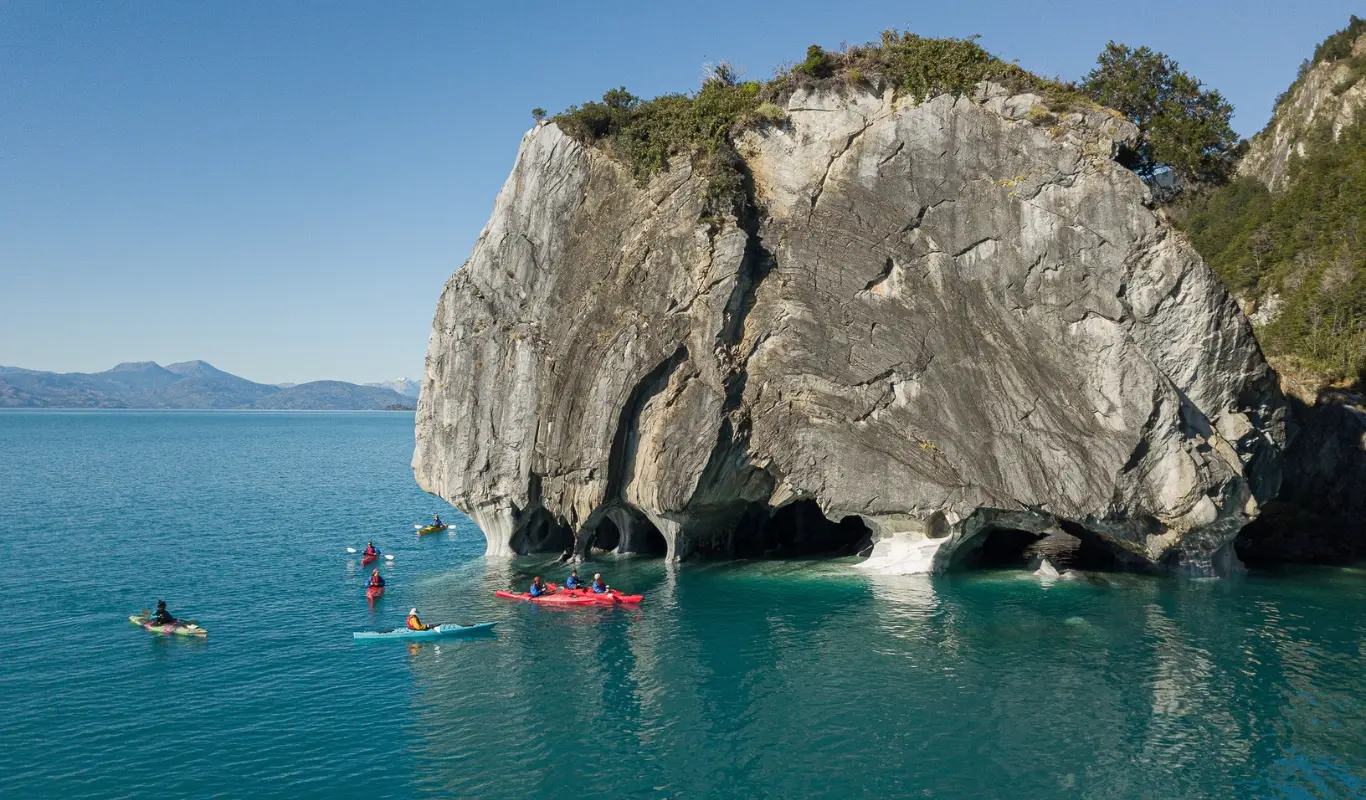

The Marble Chapels, on General Carrera Lake in the Aysén Region, are among the most impressive treasures of Chilean Patagonia. These marble formations, sculpted by thousands of years of water erosion, have become an iconic attraction, a visual spectacle that draws travellers from all over the world.
What makes the Marble Chapels so special?
The Marble Chapels stand out for their incredible colour and whimsical shapes. The marble, combined with the lake’s minerals, produces tones ranging from white to intense blue that change with the light and the water level. This play of colour creates an almost surreal atmosphere, especially in spring and summer, when the lake level is lower and light reaches into the caves, illuminating every corner.
The best-known formations are three: the Chapel, the Cathedral and the Cave. Each offers a unique experience, with caves and natural arches where the marble seems to come alive and its textures show centuries of geological history in every vein.
Visiting the Chapels by kayak
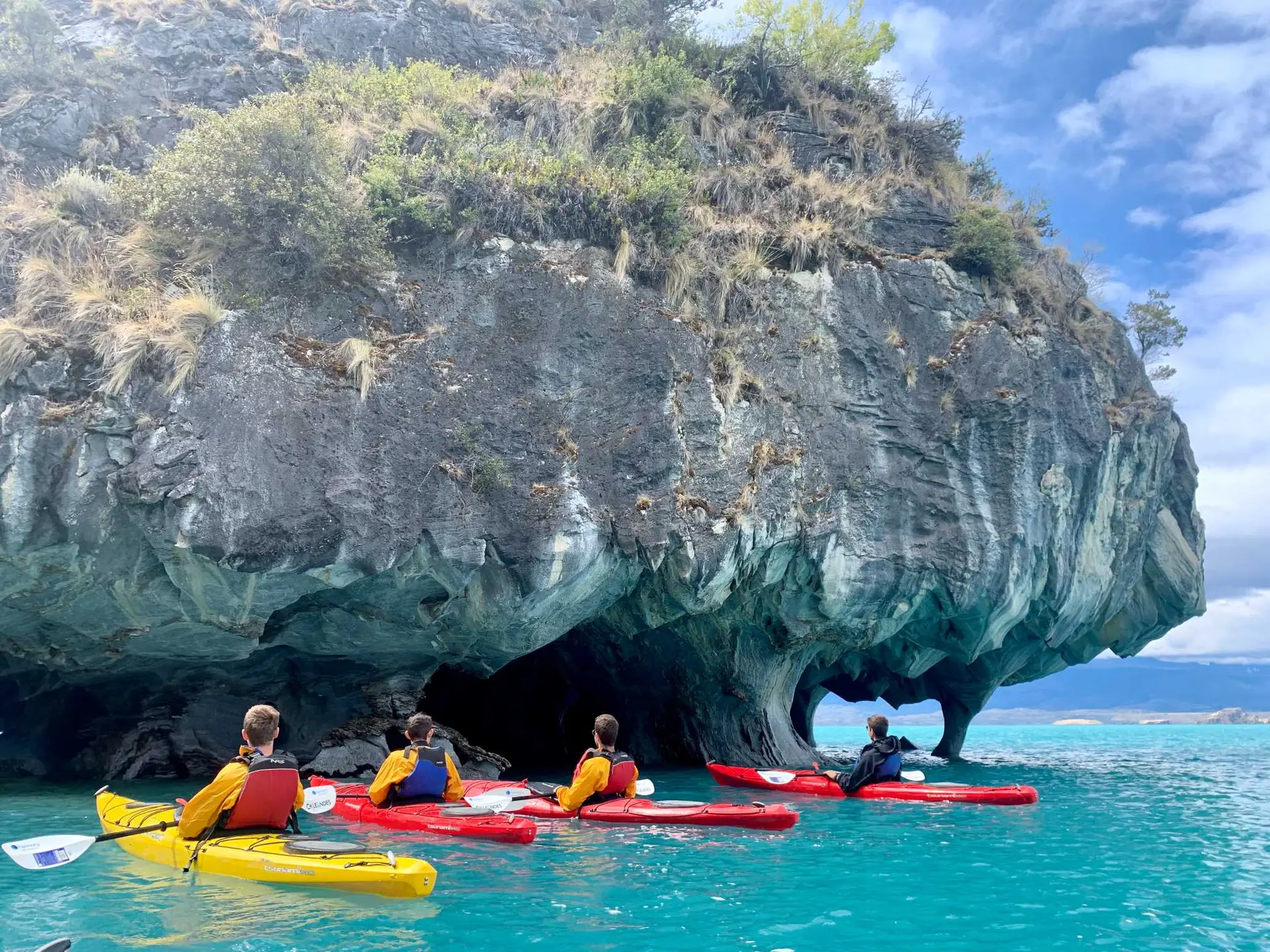
One of the best ways to explore the Marble Chapels is on a kayak tour. It lets you get close to the formations and enter their hollows in a way that is not possible in a larger boat. A kayak offers not only a more intimate connection with the surroundings but also a perspective that lets you appreciate the details of the marble and feel the calm of the lake, surrounded by Patagonia’s majestic landscapes.
Tips for visitors
- Choose your season well. The spring and summer months (November to March) are ideal, as the weather is more favourable and natural light enhances the colours.
- Bring suitable clothing. Even in summer, Patagonia can be cold and windy. Bring a waterproof jacket, comfortable footwear and, if kayaking, quick-drying clothes.
- Book ahead. Demand is high in peak season. Booking ahead is key to securing your place.
Responsible tourism: conserving the Marble Chapels
The Marble Chapels are a fragile formation and, given their popularity, responsible tourism is essential. Following your guides’ instructions, not touching the marble walls and avoiding motorboats that can cause further erosion are some of the actions that help protect this natural treasure for future generations.